-
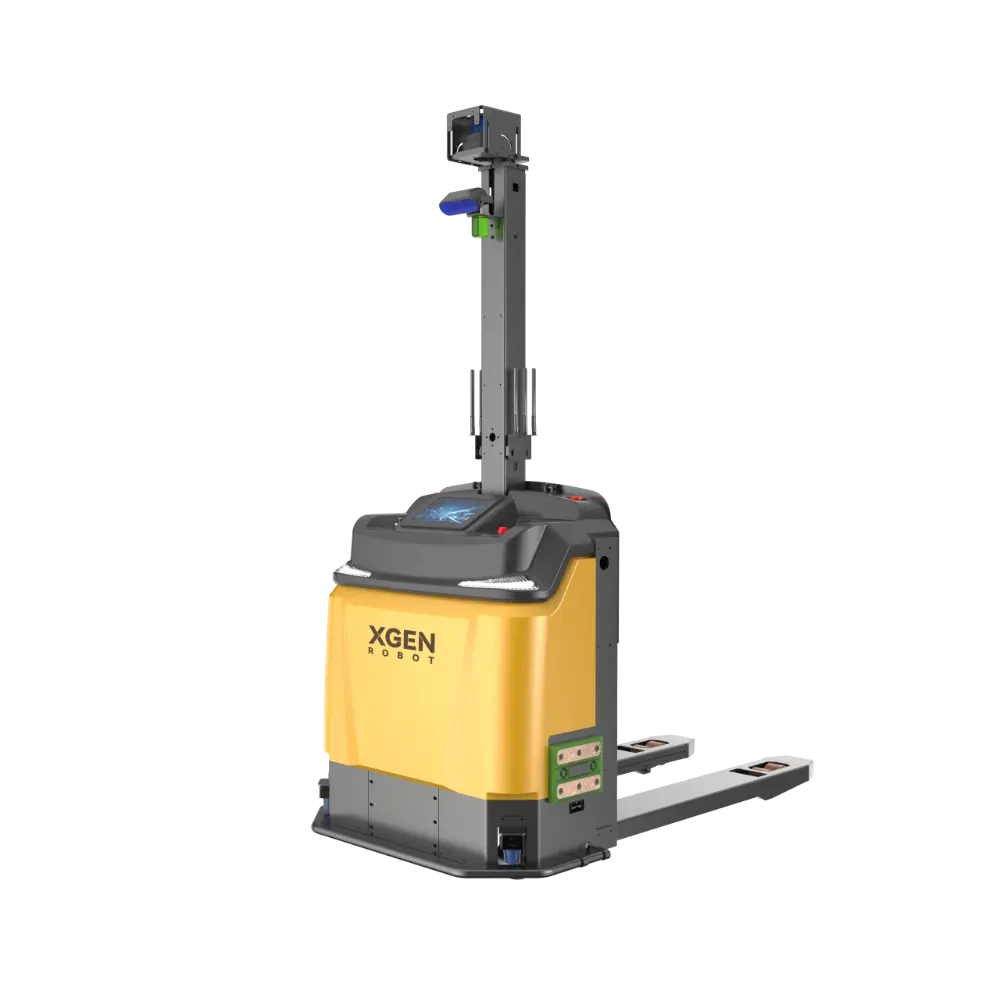
FMR stands for Forklift Mobile Robot, which is a type of forklift-style mobile handling robot primarily used for automatic material handling and storage within warehouses.
-
What Handling Or Storage Scenarios Is FMR Suitable For?
FMR is primarily suitable for common handling and storage scenarios in warehouses, including flat transport, production line connection, cross-floor transportation, and high-level storage.
-
How Much Weight Can FMR Carry, And How High Can It Lift?
In past project cases of XGEN, the actual implemented maximum load was 30T, and the maximum lifting height was 13.5M.
-
What Are The Advantages Of ASRS Compared To A Traditional Warehouse?
Compared to traditional warehouses, ASRS have the following advantages: High Space Utilization ASRS makes full use of vertical space with multi-layer shelving and automation equipment, significantly improving storage density and reducing the footprint. High Automation ASRS uses automated equipment such as stackers and conveyor systems, reducing manual labor and increasing operational efficiency and accuracy. Accurate Inventory Management With the use of WMS, ASRS can monitor inventory in real-time, optimizing stock management and reducing overstocking and stockouts. High Operational Efficiency Automated equipment can quickly complete the storage, retrieval, and handling of goods, shortening processing times and improving overall efficiency. Enhanced Safety Automation reduces manual operations, lowering accident risks. Additionally, the system has monitoring and alarm functions that further enhance warehouse safety. Cost Savings Although initial investments may be high, ASRS can significantly reduce operational costs in the long run by reducing labor, improving space utilization, and increasing operational efficiency. Strong Scalability ASRS has a modular design, making it easier to expand or adjust according to changing needs. Environment-friendly Automated equipment reduces energy consumption and carbon emissions, aligning with green and environmental standards.In summary, ASRS outperforms traditional warehouses in space utilization, automation, inventory management, operational efficiency, safety, cost savings, scalability, and environmental friendliness, making them well-suited for modern logistics needs.
-
Can ASRS Be Digitally Managed?
Yes, ASRS can be digitally managed. Digital management is one of the core advantages of ASRS and is achieved primarily through the following methods: 1. Warehouse Management System (WMS) WMS is the core of digital management in ASRS, enabling real-time inventory monitoring, optimizing storage, managing orders, and processing data to enhance overall operational efficiency. 2. Automation Equipment Integration The automated equipment in ASRS (such as stackers and conveyor systems) is seamlessly connected with the WMS, enabling full-process automation from inbound to outbound operations, reducing manual intervention. 3. Internet of Things (IoT) Technology Through sensors and RFID technology, ASRS can monitor the location, status, and environmental conditions of goods in real-time, ensuring the accuracy and timeliness of inventory data. 4. Data Analysis and Optimization Digital management collects vast amounts of operational data, which is then analyzed to optimize inventory, predict demand, and improve processes, thus increasing warehouse efficiency and reducing costs. 5. Cloud Computing and Big Data Cloud computing and big data technologies support the digital management of ASRS by providing powerful data storage, processing, and analysis capabilities, enabling remote monitoring and management. 6. Artificial Intelligence (AI) and Machine Learning AI and machine learning technologies can be applied to demand forecasting, route optimization, and inventory management, further enhancing the intelligence of the warehouse. 7. Visualization and Real-Time Monitoring Digital management provides visual interfaces and real-time monitoring features, allowing managers to keep track of warehouse status at any time and address issues promptly.