
With the rapid development of smart manufacturing and intelligent warehousing, more and more companies are adopting robotic automation solutions to improve logistics efficiency, reduce labor costs, and build smarter production systems.
Among various automation technologies, AMR (Autonomous Mobile Robot) and FMR (Forklift Mobile Robot) are two widely used intelligent material handling solutions in modern industrial logistics.
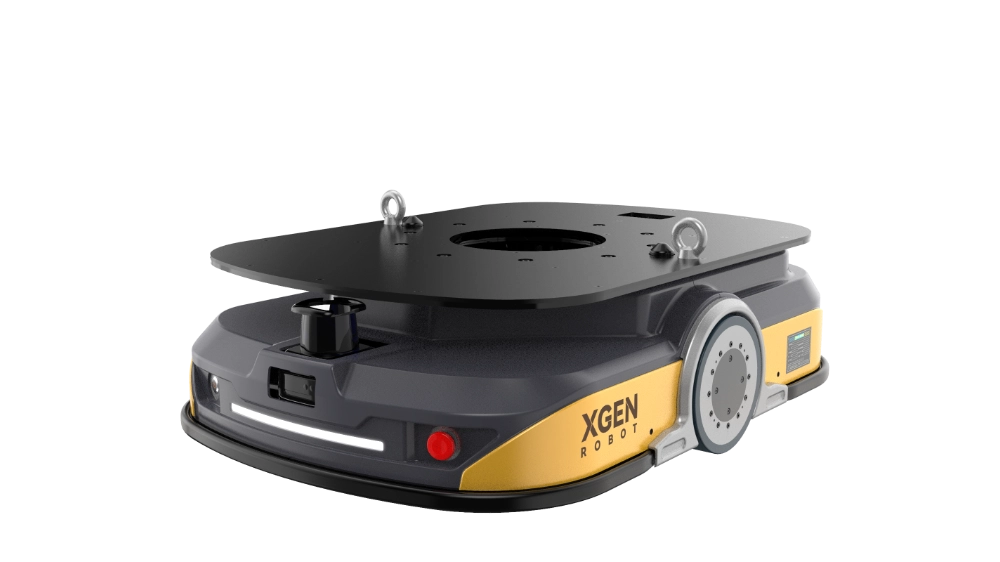
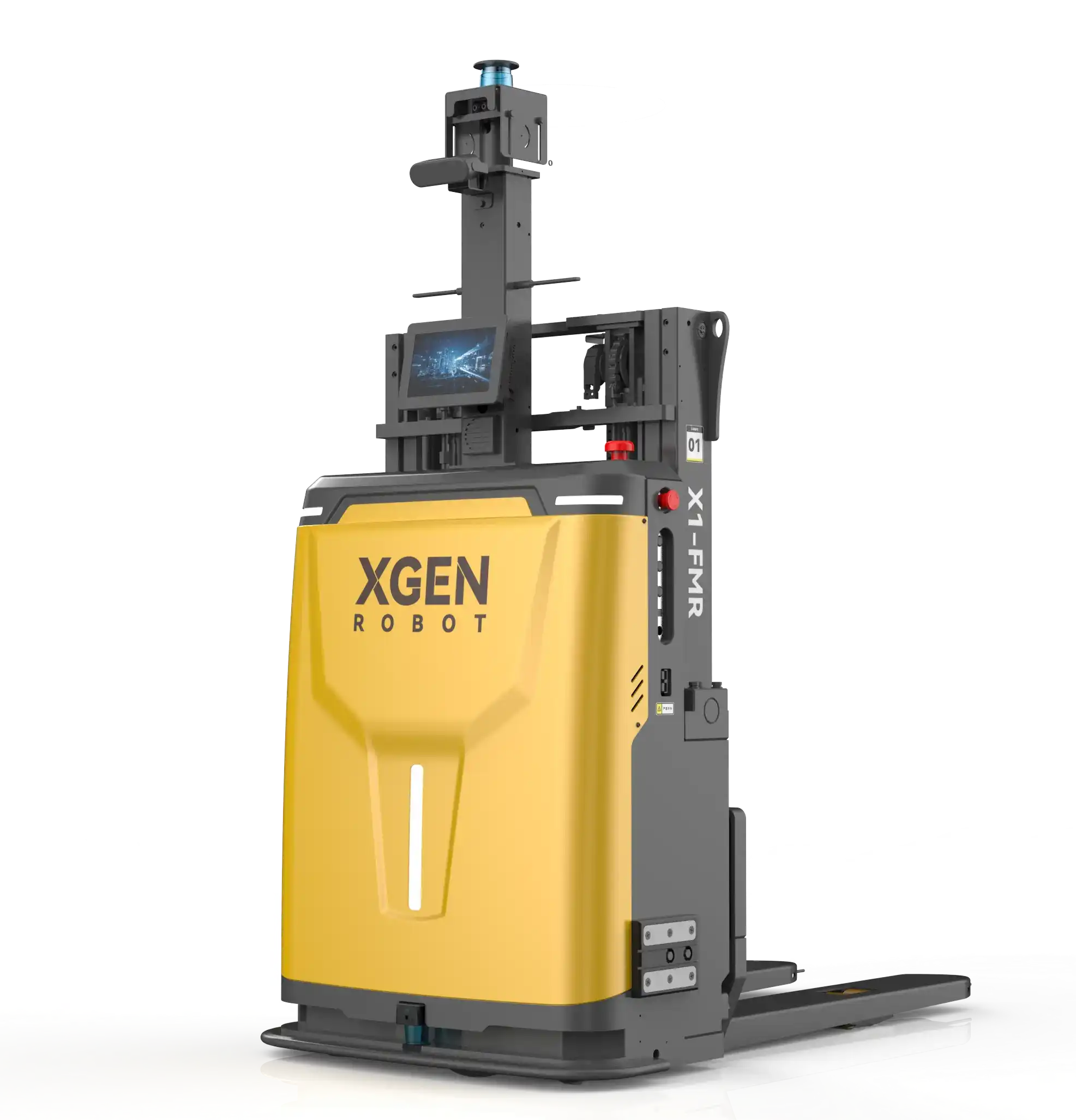
Although both AMR and FMR use autonomous navigation technology to achieve unmanned material transportation, they have significant differences in terms of functional positioning, equipment structure, load capacity, and application scenarios. So, how should companies choose the right automation solution for their factories or warehouses?
This article will explain the differences between AMR and FMR, helping businesses understand the characteristics of these two robotic technologies and select the most suitable intelligent logistics solution for their needs.
What Is an Autonomous Mobile Robot (AMR)?
An Autonomous Mobile Robot (AMR) is an intelligent mobile robot that can move independently, perceive its surroundings, and automatically plan routes to complete transportation tasks.
Unlike traditional automated guided vehicles, AMRs do not rely on fixed tracks or predefined routes. Instead, they use advanced technologies such as:
- Laser SLAM navigation
- Sensor-based perception systems
- Intelligent path planning algorithms
AMRs can automatically adjust their routes according to real-time environmental changes and avoid obstacles during operation, enabling more flexible material transportation.
With advantages such as flexible deployment and quick adaptability, AMRs are widely used in industries including electronics manufacturing, automotive production, and smart factories.
What Is a Forklift Mobile Robot (FMR)?
A Forklift Mobile Robot (FMR) is an intelligent robotic forklift developed based on autonomous driving technology. It is mainly designed to replace traditional manual forklifts and complete automated material handling operations.
Unlike standard AMRs that mainly focus on transportation, FMRs integrate forklift functions and can perform:
- Pallet picking
- Material transportation
- Lifting operations
- Goods placement
With a forklift-based structure and stronger load-handling capability, FMRs are more suitable for industrial applications requiring pallet-level automation and heavy-load transportation.
Main Differences Between AMR and FMR
Although AMR and FMR both belong to the autonomous mobile robotics category, their design purposes and application focuses are different.
1. Different Material Handling Tasks
AMRs mainly focus on flexible material transportation.
They are suitable for:
- Production line material delivery
- Parts transportation
- Logistics connection between different processes
- Small-load material handling
The biggest advantage of AMRs is flexibility. They can adjust tasks and routes according to changing production environments.
FMRs, on the other hand, focus more on forklift-level handling operations.
They can perform:
- Pallet transportation
- Heavy-load material handling
- Automated storage and retrieval operations
- Replacement of manual forklift operations
Therefore, FMRs are more suitable for warehouse logistics and heavy-duty handling applications.
2. Different Load Handling Capabilities
Load capacity is one of the biggest differences between AMR and FMR.
AMRs are commonly used for transporting:
- Material bins
- Components
- Production parts
- Small goods
They mainly support flexible internal factory logistics.
FMRs are designed for heavier industrial applications and can handle:
- Standard pallets
- Large materials
- Warehouse inventory
Thanks to their forklift structure, FMRs can perform many operations traditionally completed by conventional forklifts.
3. Different Application Scenarios
AMR Applications
AMRs are more suitable for smart manufacturing environments, including:
- Electronics manufacturing factories
- Automotive component production lines
- Precision manufacturing industries
- Flexible assembly workshops
FMR Applications
FMRs are better suited for warehouse and heavy logistics environments, such as:
- Smart warehouses
- Distribution centers
- Automotive manufacturing plants
- Heavy industrial production sites
AMR vs FMR Comparison
| Comparison Options | AMR (Autonomous Mobile Robot) | FMR (Forklift Mobile Robot) |
| Main Function | Flexible material transportation | Automated forklift handling |
| Navigation | SLAM autonomous navigation | SLAM autonomous navigation |
| Transport Objects | Parts, bins, components | Pallets and heavy goods |
| Lifting Function | Optional | Available |
| Flexibility | Very High | High |
| Heavy Load Capability | General | Strong |
| Best Application | Factory internal logistics | Warehouse automation |
How to Choose Between AMR and FMR?
Choosing between AMR and FMR depends on the specific production and logistics requirements of each company.
If your main requirements include:
- Flexible material transportation
- Production line feeding
- Multi-station delivery
- Fast automation deployment
Then AMR is a more suitable choice.
If your requirements include:
- Pallet transportation
- Automated warehouse operations
- Replacing manual forklifts
- Heavy-load material handling
Then FMR is the better solution.
Can AMR and FMR Work Together?
In advanced smart factories, AMR and FMR are not competitors. Instead, they can work together to create a complete intelligent logistics system.
Through intelligent scheduling systems, AMRs and FMRs can operate collaboratively to achieve more efficient automated logistics management.
Why Choose XGEN ROBOT AMR and FMR Solutions?
As an intelligent robotics solution provider, XGEN ROBOT focuses on providing advanced automation equipment for smart manufacturing and intelligent warehousing.
XGEN ROBOT provides various intelligent mobile robot solutions, including:
- Autonomous Mobile Robot (AMR)
- Forklift Mobile Robot (FMR)
- Automated Storage and Retrieval System Solutions
With advanced navigation technology, intelligent control systems, and flexible deployment capabilities, XGEN ROBOT helps companies:
- Improve logistics transportation efficiency
- Reduce manual handling costs
- Optimize warehouse management processes
- Build smarter factories
Whether companies need flexible production logistics solutions or pallet-level warehouse automation, XGEN ROBOT provides reliable robotic solutions tailored to different industrial requirements.
Conclusion
Both AMR and FMR are important parts of modern industrial automation, but they solve different operational challenges.
AMR focuses on flexible material transportation, while FMR provides forklift-level automation capabilities, making it more suitable for pallet handling and intelligent warehouse applications.
By understanding the differences between Autonomous Mobile Robot (AMR) and Forklift Mobile Robot (FMR), companies can select the right automation technology, improve logistics efficiency, and accelerate their transition toward smart manufacturing.