
More and more companies are adopting automated material handling equipment to replace traditional manual forklift operations. Among various intelligent logistics solutions, the Counterbalance AGV has become widely used in industries such as automotive manufacturing, new energy, machinery processing, and warehousing due to its strong load capacity, flexible handling capability, and excellent environmental adaptability.
Compared with traditional manual material handling, Counterbalance AGVs can reduce labor costs, improve transportation stability, and enhance workplace safety by enabling automated material flow between production areas and warehouses.
However, different industries have different requirements in terms of material weight, production processes, operating environments, and automation goals. Therefore, selecting the right Counterbalance AGV is critical to the efficiency and long-term value of an automation project. A proper selection process should consider multiple factors, including load capacity, application scenarios, navigation methods, system integration, and future scalability.
What Is a Counterbalance AGV?
A Counterbalance AGV is an intelligent material handling robot that combines traditional forklift structures with autonomous navigation technology. Unlike conventional pallet handling AGVs, a Counterbalance AGV uses a counterweight structure at the rear of the vehicle to maintain stability, allowing it to handle pallets, transport materials, and perform production line delivery tasks without relying on rack support.
Due to its strong lifting and handling capability, Counterbalance AGVs are especially suitable for transporting heavy industrial materials, including mechanical components, automotive parts, new energy battery materials, and large pallet loads.
Compared with traditional forklifts, AGVs can automatically execute transportation tasks according to predefined routes, enabling continuous, stable, and safe material movement while reducing risks caused by manual operation and improving logistics efficiency.
With the increasing demand for smart factories, Counterbalance AGVs equipped with technologies such as laser SLAM navigation and vision-based navigation have become an important part of flexible manufacturing and intelligent warehouse systems.
Choosing the Right Counterbalance AGV Based on Load Capacity
Load capacity is the core parameter that enterprises must consider first when selecting AGVs. Different production environments have significantly different requirements for handling weight. If equipment operates close to its limit load for extended periods, it will not only affect operational stability but also reduce the equipment’s lifespan.
During the selection process, enterprises need to comprehensively evaluate the maximum weight of goods, average handling weight, pallet size, and center of gravity distribution of goods, based on their actual logistics needs. For example, a typical manufacturing company may mainly handle industrial materials weighing around 1 ton, while industries such as automotive and new energy may involve transporting parts weighing 2 tons or even more.
It is important to note that the rated load of an AGV is not the only criterion. Cargo size, center of gravity height, forklift distance, and operating speed all affect handling stability. Therefore, in actual project planning, it is usually necessary to reserve a reasonable safety margin based on maximum operating conditions to ensure long-term stable operation of the equipment.
For heavy-duty logistics scenarios, counterbalanced AGVs have a stronger load-bearing advantage compared to traditional lurking AGVs or pallet handling robots, making them more suitable for handling large materials and high-frequency handling tasks.
Selecting AGV Functions Based on Application Scenarios
The operating environment directly affects the configuration and functional requirements of a Counterbalance AGV. When selecting an AGV solution, companies should consider factors such as working area, transportation distance, and automation objectives.
Indoor Applications: Focus on Precise Handling and Flexible Scheduling
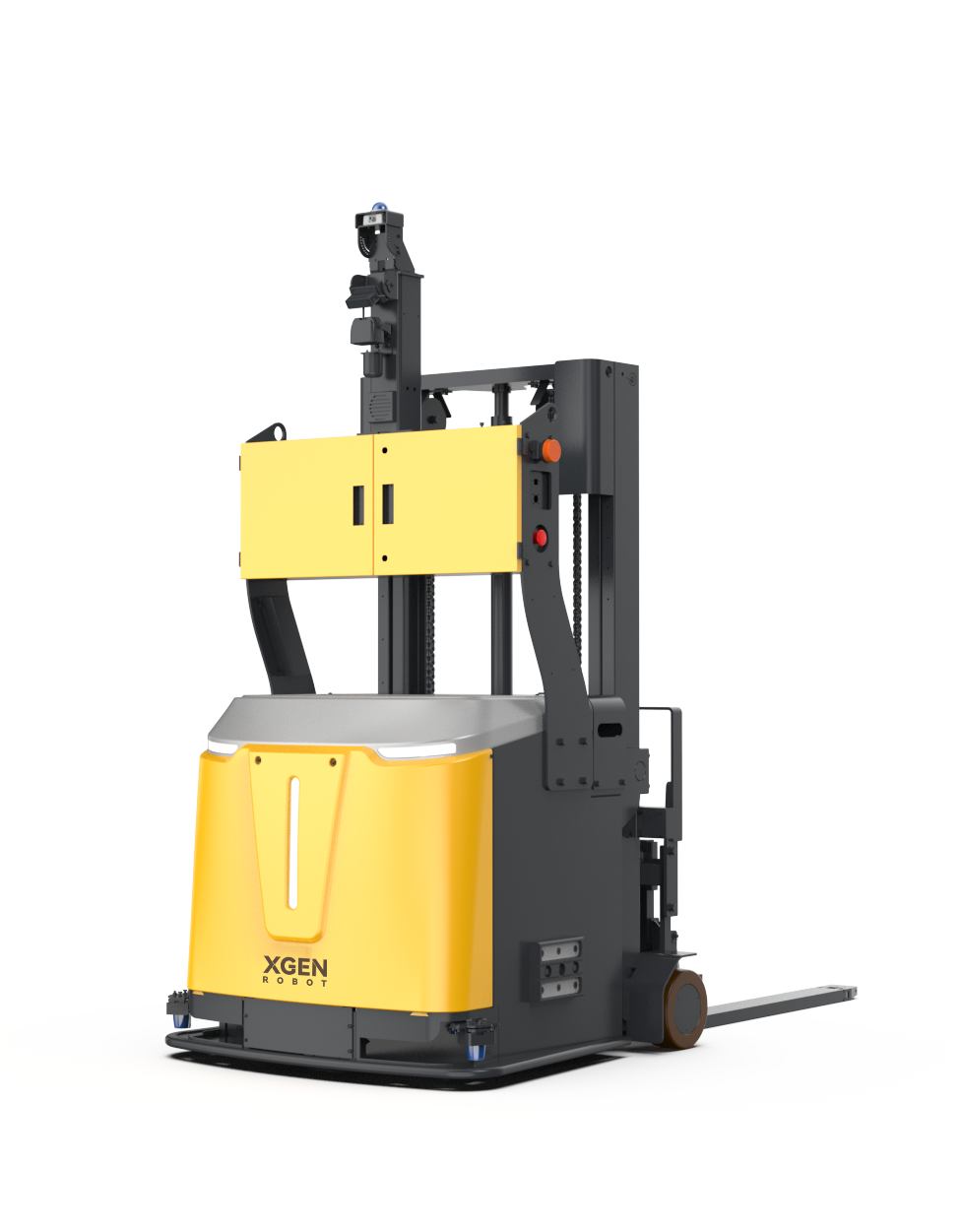
In smart factories, production workshops, and automated warehouses, Counterbalance AGVs are mainly used for raw material delivery, production line supply, and pallet transportation.
Since indoor environments usually have limited space and complex logistics routes, AGVs need to provide high-precision positioning, intelligent obstacle avoidance, and multi-vehicle coordination capabilities. Counterbalance AGVs equipped with laser SLAM navigation can build maps independently and optimize routes based on actual conditions, making them suitable for flexible manufacturing and intelligent warehousing applications.
Outdoor Applications: Focus on Stability and Environmental Adaptability
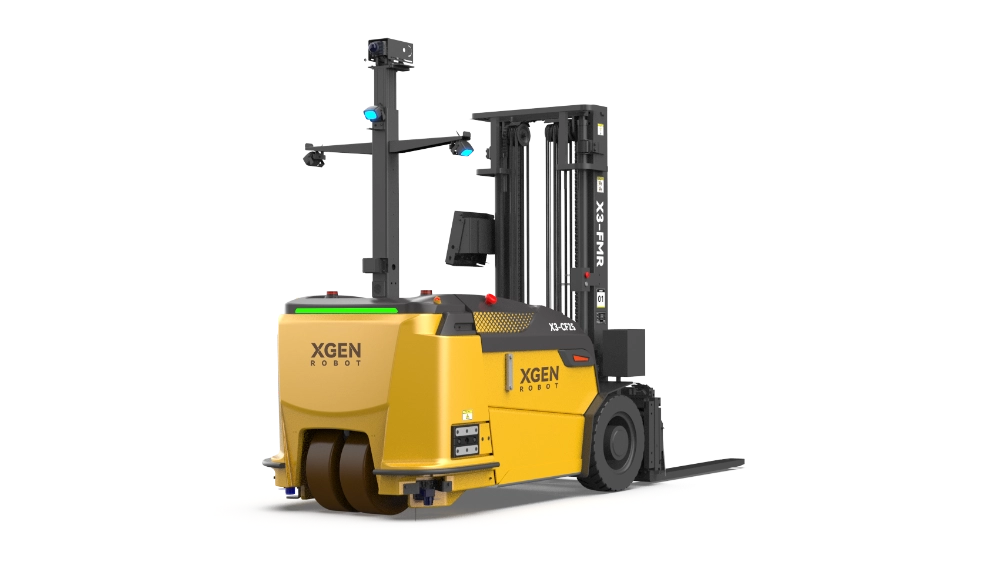
In industrial parks, factory logistics areas, and large manufacturing facilities, Counterbalance AGVs are often used for long-distance material transportation.
Compared with indoor applications, outdoor Counterbalance AGVs require stronger environmental adaptability, including higher protection levels, more stable operation performance, and longer battery endurance. High-precision positioning and intelligent scheduling systems help ensure safe and efficient operation even in complex outdoor environments.
Navigation Methods Determine AGV System Flexibility
Navigation technology is a key factor affecting AGV efficiency and application flexibility. Common industrial AGV navigation methods include magnetic navigation, QR code navigation, and laser SLAM navigation.
Magnetic navigation offers advantages such as lower cost and stable operation, making it suitable for applications with fixed transportation routes and stable production processes. However, when companies need to modify factory layouts or introduce new logistics routes, traditional magnetic navigation may have limitations in flexibility.
In comparison, laser SLAM navigation provides greater adaptability. By using LiDAR sensors to scan the environment and create maps, AGVs can achieve autonomous positioning and path planning without installing magnetic strips or QR codes. When factory layouts change, routes can be optimized through software adjustments, making SLAM-based Counterbalance AGVs more suitable for modern smart manufacturing environments.
For companies with frequent production changes, multiple product types, and flexible manufacturing requirements, SLAM navigation can provide higher long-term value.
Other Factors to Consider When Selecting a Counterbalance AGV
Besides load capacity and navigation methods, companies should also evaluate the overall capabilities of the AGV system. A complete automated material handling solution includes not only the AGV hardware but also fleet management systems, safety control, battery management, and integration with enterprise information systems.
In multi-AGV environments, the management system should support task allocation, route optimization, vehicle coordination, and real-time monitoring to ensure efficient operation. Safety features are also essential for industrial applications, including laser obstacle detection, safety sensors, emergency stops, and collision prevention functions.
In addition, companies should consider future expansion requirements, such as increasing the number of AGVs, upgrading logistics systems, or integrating additional automation equipment. A scalable solution can provide greater long-term value as business needs grow.
How to Choose the Right Counterbalance AGV for Your Business?
Selecting a Counterbalance AGV is not simply about comparing equipment specifications. It requires a comprehensive evaluation of the company’s overall logistics process. Factors such as load capacity, operating environment, navigation technology, and system integration capabilities all influence the final performance of the automation solution.
For companies looking to improve production efficiency, reduce labor costs, and build smart factories, choosing the right Counterbalance AGV can help achieve more stable, efficient, and safer automated material handling operations.
Looking for the right Counterbalance AGV solution for your application? XGEN ROBOT offers customized automated material handling solutions based on your load requirements, operating environment, and production workflow. From AGV deployment planning to system integration, our team helps manufacturers achieve safer, smarter, and more efficient logistics automation.