
In the warehousing and logistics industry, throughput efficiency directly impacts order fulfillment speed, inventory turnover, and overall operational costs. As warehouse space becomes increasingly limited and labor costs continue to rise, more companies are turning their attention to automated reach trucks to improve operational efficiency.
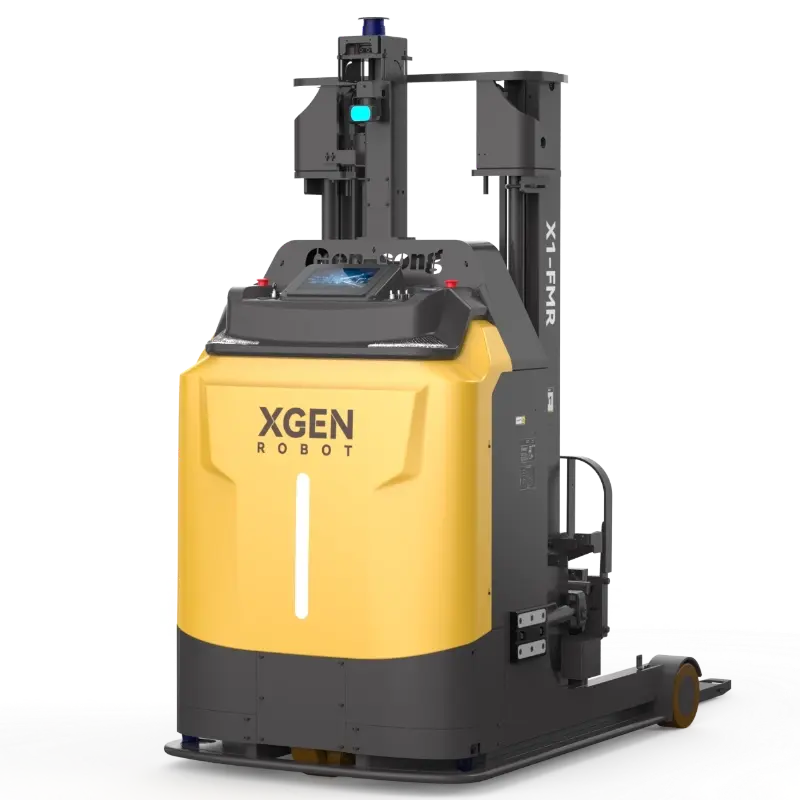
Automated reach trucks are well-suited for high-bay racking, narrow aisle operations, and high-frequency handling scenarios. They enable higher-density operations within limited space. For companies aiming to upgrade their warehouse automation, they are not just handling tools, but a key solution for improving throughput efficiency.
Why Automated Reach Trucks Are Ideal for High-Efficiency Warehousing
The core advantage of automated reach trucks lies in their ability to optimize both space utilization and operational efficiency. Compared to traditional forklifts, they are better suited for narrow aisles and high-level storage, allowing warehouses to increase storage density without expanding floor space.
When upgraded to automated systems, warehouses can further reduce manual intervention through centralized task scheduling, intelligent path planning, and automated task allocation. This ensures smoother coordination between handling, storage, and outbound operations—making the entire system not only faster but also more stable.
How Automated Reach Trucks Improve Throughput Efficiency
The value of automated reach trucks goes beyond simply “moving faster.” They enhance the overall workflow, making warehouse operations more streamlined and consistent. Key improvements include:
- Improved space utilization: Designed for narrow aisles and high-bay racking, enabling higher storage density without increasing warehouse size.
- Reduced unnecessary movement: Integration with WMS and WCS systems enables optimized routing and task scheduling, reducing empty travel and repetitive handling.
- Enhanced operational continuity: Automated equipment can operate continuously, minimizing efficiency fluctuations caused by labor shifts and fatigue.
- Optimized task allocation: Centralized warehouse systems assign tasks more efficiently, ensuring smoother coordination between inbound, storage, and outbound processes.
- Faster order response time: System-driven operations enable quicker handling of inbound and outbound activities.
For high-turnover warehouses, these improvements can significantly increase throughput efficiency.
Suitable Application Scenarios
Automated reach trucks are particularly suitable for warehouses with dense storage, frequent turnover, and limited space, such as:
- E-commerce warehouses
- Manufacturing raw material storage
- Third-party logistics (3PL) warehouses
- Cold chain distribution centers
- High-bay, high-density storage facilities
They are an ideal starting point for companies looking to upgrade to warehouse automation while maximizing efficiency within limited space.
Key Considerations for Implementation
While automated reach trucks offer clear efficiency benefits, successful implementation requires careful evaluation of actual warehouse conditions. Factors such as rack height, aisle width, floor condition, pallet specifications, and order fluctuations can all affect system performance.
In addition, autonomous reach trucks typically need to be integrated with warehouse management systems to enable task automation, real-time status feedback, and route optimization. Without proper system integration and process alignment, the full potential of the equipment cannot be realized.
The Future of Automated Warehousing
The warehousing and logistics industry is shifting from labor-driven operations to system-driven operations. More companies are adopting automated handling equipment, intelligent scheduling systems, and digital management tools to enhance warehouse efficiency.
In this transition, the value of automated reach trucks extends beyond handling—they help establish a more stable and predictable operational rhythm. For warehouses aiming for high throughput, high density, and high stability, they represent a highly practical automation solution.
Frequently Asked Questions (FAQs)
What is the difference between automated reach trucks and traditional forklifts?
Automated reach trucks are designed for narrow aisles and high-bay storage, allowing them to perform picking, handling, and stacking tasks in tighter spaces. Compared to traditional forklifts, they offer better space utilization and continuous operation capabilities.
How much efficiency improvement can be expected?
The level of improvement depends on warehouse layout, order structure, and system integration. In cases where there are bottlenecks such as congestion, idle time, or inefficient routes, significant improvements can be achieved after implementation.
What types of businesses are suitable for automated reach trucks?
They are ideal for e-commerce, manufacturing, cold chain logistics, third-party logistics providers, and high-density warehousing operations. Any business facing high handling frequency and limited space can benefit.
Can automated reach trucks integrate with WMS systems?
Yes. They can typically be integrated with warehouse management systems to enable automated task allocation, real-time tracking, and optimized routing, thereby improving overall warehouse efficiency.
Conclusion
Automated reach trucks are becoming a key solution for improving throughput efficiency in the warehousing and logistics industry. They not only enhance space utilization but also reduce uncertainties associated with manual handling, resulting in more stable and efficient operations.
For companies seeking warehouse automation upgrades, automated reach trucks are a solution worth serious consideration. XGEN ROBOT supports businesses from equipment selection and system integration to process optimization—helping unlock the full potential of warehouse space.