
Table of Contents
Understanding the Two AMR Types in Warehouse Operations
Warehouse automation is not simply about moving materials from one location to another. Different facilities have different material handling requirements, depending on load weight, storage height, delivery frequency, aisle layout, and the connection between storage and production areas.
Two common automation requirements are heavy-load horizontal transportation and multi-level material delivery. Although both can be addressed with autonomous mobile robot technology, the equipment configurations and operating principles are different.
A latent mobile robot AMR is designed primarily for transporting heavy loads across a warehouse or factory floor. Its low-profile structure allows it to move beneath or connect with compatible load carriers, depending on the handling configuration.
A multi-layer autonomous mobile robot, on the other hand, is designed to support material handling across different vertical levels. Its lifting mechanism allows it to access multiple storage or delivery heights, making it suitable for workflows where materials need to be transferred between different layers.
The key selection question is therefore not which robot has more advanced technology, but which configuration matches the actual movement of materials through the facility.
Latent AMR vs. Multi-Layer AMR: Key Differences
The two robot types serve different operational priorities. Their differences become clearer when evaluated against actual warehouse requirements.
| Comparison Factor | Latent Mobile Robot AMR | Multi-Layer Autonomous Mobile Robot |
|---|---|---|
| Primary function | Heavy-load horizontal transportation | Multi-level material handling |
| Load capacity | Up to 3,000 kg | Up to 250 kg |
| Lifting requirement | Depends on the load-handling configuration | Integrated lifting capability |
| Maximum lifting height | Not specified in the listed configuration | 5.5 m |
| Maximum pickup distance | Not specified | 1.5 m |
| Minimum turning radius | 0.875 m | 0.925 m |
| Movement mode | Forward, backward, and spot rotation | Depends on the configured operating system |
| Typical application | Heavy materials, production loads, and large load carriers | Multi-level storage, picking, and workstation delivery |
The most noticeable difference is load capacity. The latent model supports loads up to 3,000 kg, while the multi-layer model has a rated capacity of 250 kg.
However, capacity alone should not determine the selection. A warehouse moving heavy pallets between production areas has different requirements from a facility delivering smaller containers to several storage levels.
When Should You Choose a Latent Mobile Robot AMR?
1. Your material flow is primarily horizontal
A latent AMR is a practical option when materials need to move between relatively fixed locations on the same floor.
Typical workflows include:
- Transferring heavy materials from receiving areas to temporary storage.
- Moving production materials between processing stations.
- Delivering loaded carriers from storage areas to assembly lines.
- Transporting heavy goods between designated warehouse zones.
In these applications, the main transportation challenge is moving a load safely and consistently across the floor rather than accessing different storage heights.
For example, a manufacturing facility may need to transport loaded carriers weighing 1,500–2,500 kg between a raw material area and several production stations. A high-capacity latent robot can support this type of transportation without requiring a conventional forklift for every internal transfer.
2. Your operation involves heavy or bulky loads
Load weight has a direct influence on robot selection, floor requirements, braking performance, and route planning.
The 3,000 kg rated capacity of the latent AMR provides a different operating range from the 250 kg multi-layer model.
Nevertheless, buyers should distinguish between rated payload and the total transported weight. The actual payload must account for the carrier, fixtures, and any lifting or docking accessories included in the configuration.
Before deployment, confirm:
- Maximum and average transported load weights.
- Load dimensions and center of gravity.
- Carrier or pallet compatibility.
- Floor flatness and load-bearing capacity.
- Required stopping distance and safety clearance.
These details help determine whether the selected robot can operate reliably under actual warehouse conditions.
3. Your warehouse requires flexible movement around obstacles
The listed latent model supports forward and backward movement as well as spot rotation, with a minimum turning radius of 0.875 m.
These movement capabilities can be useful in facilities where transportation routes involve multiple directions, turning points, and workstation connections.
However, the minimum turning radius should not be treated as the required aisle width. Actual route clearance also depends on the robot’s dimensions, load overhang, safety sensors, and surrounding equipment.
A warehouse with narrow passages should therefore evaluate the complete operating envelope rather than relying on a single turning-radius specification.
When Is a Multi-Layer Autonomous Mobile Robot More Suitable?
1. Your material flow involves different storage heights
A multi-layer autonomous mobile robot is more appropriate when materials need to be accessed or delivered at different vertical levels.
For example, a warehouse may use several storage levels to organize bins, components, or production supplies. Materials are not simply transported along the floor; they must also be transferred to the correct height.
The listed multi-layer model has a maximum lifting height of 5.5 m, which provides a defined vertical handling range for suitable applications.
This configuration can support workflows such as:
- Delivering components to multi-level storage locations.
- Transferring materials between designated storage layers.
- Supplying production workstations at different heights.
- Supporting organized bin or container handling.
The actual application depends on the rack design, load dimensions, pickup position, and required transfer interface.
2. Your operation handles smaller loads at higher frequencies
The multi-layer model has a rated load capacity of 250 kg. This makes it more relevant to lighter material handling tasks than to heavy pallet transportation.
Consider an electronics assembly facility where small containers of components need to be delivered to different production stations. The individual loads may be relatively light, but deliveries occur frequently and involve multiple storage positions.
In this situation, the ability to access different levels may provide more operational value than a high payload rating.
The selection should consider the combined weight of the material and its container, particularly when the robot needs to lift loads at its maximum operating height.
3. Your warehouse needs to connect storage and picking operations
Multi-level storage can increase the available storage area within a limited floor footprint. However, it also creates additional material transfer requirements.
A multi-layer robot can help connect storage positions with picking or delivery points, provided the storage infrastructure is designed for its lifting and pickup configuration.
The maximum pickup distance of 1.5 m is another parameter worth evaluating. Buyers should compare this specification with the actual distance between the robot’s handling mechanism and the target load position.
Rack dimensions, shelf spacing, container size, and transfer alignment should all be confirmed before ordering.
How to Match Robot Types to Different Warehouse Material Flows
Rather than selecting equipment based only on product specifications, start by mapping how materials move through the facility.
The following scenarios illustrate how different workflows influence the decision.
| Warehouse Material Flow | Main Handling Requirement | More Suitable Robot Type |
|---|---|---|
| Receiving area → heavy-load storage | Horizontal transportation of heavy goods | Latent AMR |
| Raw materials → production line | Repeated movement of heavy carriers | Latent AMR |
| Multi-level storage → picking station | Vertical access and material delivery | Multi-layer AMR |
| Component storage → assembly workstation | Handling lighter materials across different levels | Multi-layer AMR |
| Heavy goods → several production zones | High-capacity transportation across floor routes | Latent AMR |
| Multi-level inventory replenishment | Access to designated storage heights | Multi-layer AMR |
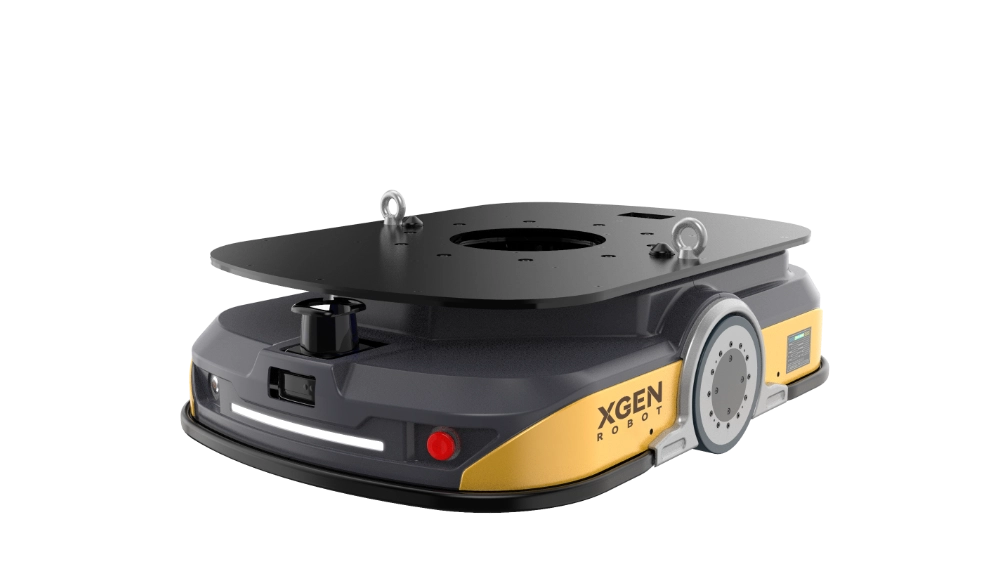

Some warehouses may require both configurations.
For instance, a manufacturing facility could use latent AMRs to transport heavy material carriers from receiving to production areas, while multi-layer robots handle smaller components between storage levels and assembly stations.
In this arrangement, each robot type performs a specific transportation task instead of forcing one configuration to handle every material movement.
Five Factors to Evaluate Before Purchasing an AMR
Even when the robot type appears suitable, several practical conditions should be checked before finalizing the equipment configuration.
1. Load dimensions and weight
Confirm maximum payload, average payload, load center, and external dimensions. A robot’s rated capacity does not automatically guarantee compatibility with every load shape or carrier.
2. Storage and aisle configuration
Measure aisle width, turning areas, rack height, shelf spacing, and workstation clearance. For multi-level handling, also confirm the vertical distance between pickup and delivery positions.
3. Transportation frequency
Estimate the number of daily trips, average travel distance, loading time, unloading time, and peak-hour demand. These figures help determine the number of robots required and whether the proposed system can meet throughput targets.
4. Navigation and system integration
Check how the robots will communicate with warehouse management systems (WMS), manufacturing execution systems (MES), elevators, automatic doors, conveyors, and other material handling equipment.
The navigation method and dispatching logic should also be evaluated against the actual facility layout and operating conditions.
5. Safety and future expansion
Review pedestrian traffic, crossing points, emergency access, charging arrangements, and maintenance requirements. If warehouse capacity or production output is expected to increase, consider whether the transportation routes and fleet management system can accommodate additional robots.
XGEN Robot provides both latent and multi-layer AMR configurations for different material handling requirements. The final selection should be based on verified load specifications, warehouse dimensions, and the intended operating workflow.
Frequently Asked Questions
1. Can a latent AMR replace a multi-layer autonomous mobile robot?
Not in every application. A latent AMR is primarily intended for horizontal transportation, while a multi-layer model provides lifting capability for handling materials at different heights. If the workflow requires vertical access to multiple storage levels, a standard latent configuration may not provide the required functionality.
2. Is a 3,000 kg latent AMR suitable for pallet transportation?
It can be considered for heavy-load transportation, but pallet compatibility must be verified. Buyers should confirm pallet dimensions, entry clearance, load distribution, lifting or docking requirements, and the robot’s rated payload under the intended configuration.
3. What should buyers confirm before selecting a multi-layer AMR?
The most important details include the required lifting height, load weight, pickup distance, shelf spacing, container dimensions, and transfer position. These parameters should be checked together to ensure that the robot can access the intended storage locations safely and consistently.