
In material handling, warehousing logistics, and industrial supply chains, the level of space layout optimization and the efficiency of goods turnover directly determine a company’s operating costs and profit levels.
Among various equipment options, reach trucks and counterbalance forklifts are undoubtedly the two core mainstays.
So, which one is more suitable for your warehouse?
Quick Answer: Reach Truck vs Counterbalance Forklift
- Choose a Reach Truck: Suitable for narrow aisles and high racking warehouses (above 6 meters)
- Choose a Counterbalance Forklift: Suitable for indoor and outdoor operations, loading/unloading, and heavy-duty handling
Table of Contents
1. Counterbalance Forklift: The Versatile Workhorse
Counterbalance forklifts are the most widely used type of forklift globally. Their core principle lies in installing a counterweight at the rear of the vehicle to balance the load lifted at the front.
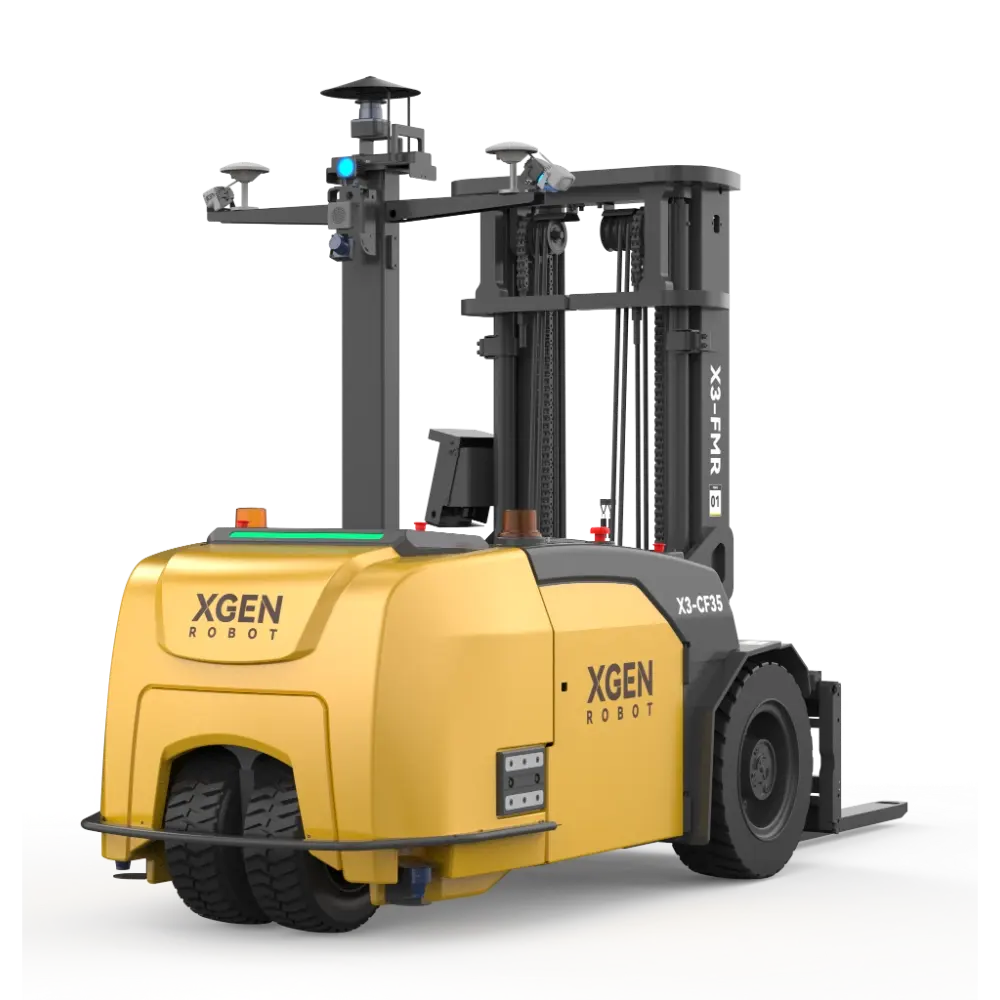
Core Structure and Functional Features:
- No front outriggers, allowing direct access to goods or trucks
- Supports multiple power options such as electric, diesel, and LPG
- Can be equipped with pneumatic or solid tires to adapt to complex ground conditions
- High load capacity, suitable for heavy-duty operations
Best Application Scenarios:
Counterbalance forklifts perform exceptionally well in cross-docking, directly loading and unloading trucks from ground level or dock positions, transporting heavy materials between indoor production lines and outdoor yards, as well as in general handling scenarios where aisle width is not restricted.
2. Reach Truck: Designed for High Racking and Narrow Aisles
A reach truck is a highly specialized warehouse equipment. Its mast can extend forward into racking systems to achieve efficient storage and retrieval.
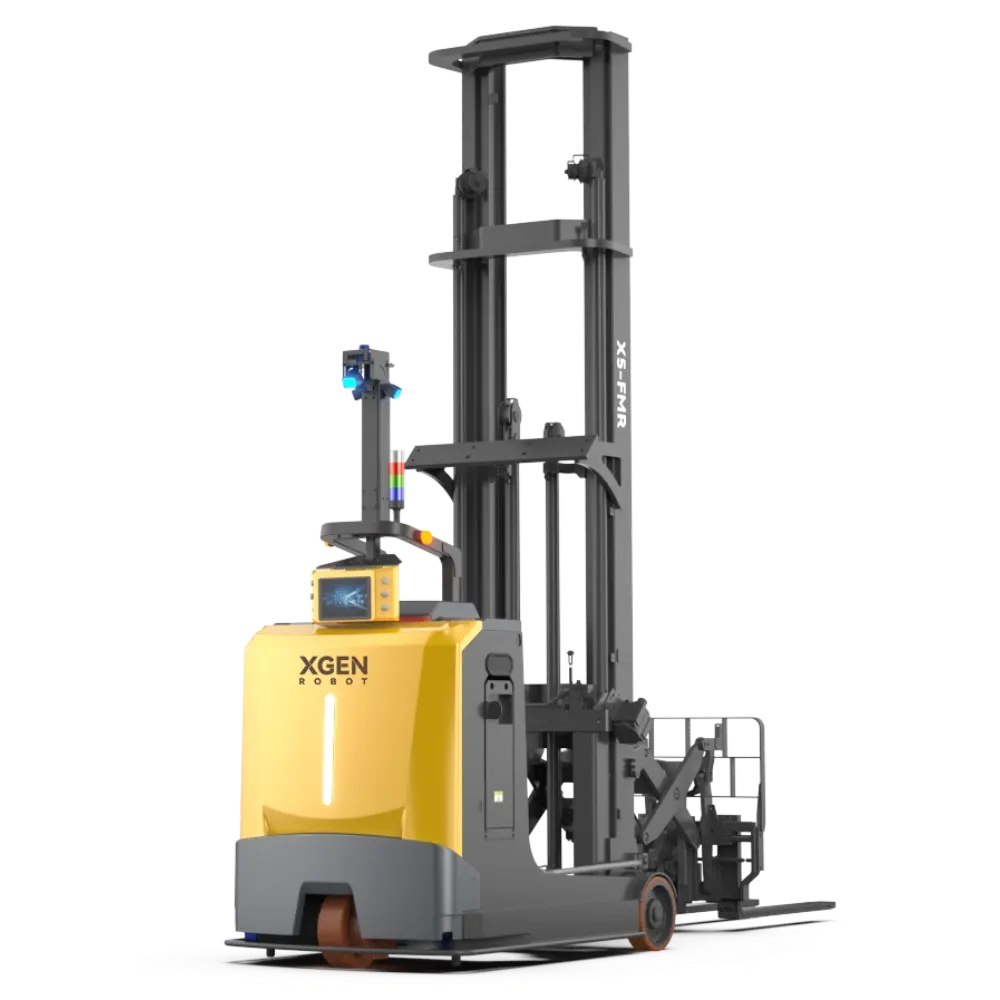
Core Structure and Functional Features:
- Outrigger leg structure to improve stability
- Compact body, suitable for narrow aisles (2.5–3 meters)
- Lifting height can reach 6–12 meters or more
- Only suitable for indoor smooth and flat surfaces
Best Application Scenarios:
Reach trucks are specifically designed for operation on smooth, flat indoor floors. They are ideal for high-density e-commerce fulfillment centers, cold chain warehouses, and facilities using selective racking, double-deep racking, or narrow aisle racking systems.
3. Reach Truck vs Counterbalance Forklift: Key Comparison
To help you accurately balance your fleet allocation, the following table provides a direct comparison of the key operational indicators of these two types of equipment:
| Specification | Reach Truck | Counterbalance Forklift |
| Operating Environment | Indoor only | Indoor & Outdoor |
| Aisle Width | Narrow aisle (2.5–3m) | Wide aisle (≥3.5m) |
| Lift Height | 6–12m | 3–6m |
| Load Capacity | Medium | High |
| Maneuverability | High | Medium |
4. How to Choose the Right Forklift for Your Warehouse
- Aisle Width and Space Utilization
If your warehouse aims to maximize storage density, reach trucks can reduce aisle width by approximately 35%–40%, significantly increasing storage capacity.
- Lifting Height and Vertical Space
When racking height exceeds 6 meters, reach trucks offer greater advantages in stability and operational safety.
- Working Environment
If it is an indoor high-density storage scenario, choose a reach truck; if it involves outdoor or loading/unloading operations, choose a counterbalance forklift.
5. Final Decision: Which One is More Suitable for Your Warehouse?
There is no absolute winner in the comparison between reach trucks and counterbalance forklifts. The choice entirely depends on the specific constraints of your facility and workflow:
- Choose a Counterbalance Forklift if: You mainly manage high-frequency, fast-paced loading docks, frequently load and unload containers or trucks directly, have significant outdoor operation requirements, need to handle heavy or non-standard industrial goods, and have sufficient aisle space in your warehouse.
- Choose a Reach Truck if: You operate a fully indoor distribution center, use high-density racking systems, aim to maximize space utilization and achieve the highest pallet storage density, and your aisle width is narrow (around 3.0 meters).
In many medium and large logistics hubs, the optimal solution is often not choosing one over the other, but a scientific combination of both. Counterbalance forklifts handle heavy unloading and inbound operations at the dock, while reach trucks take over to efficiently place goods into high-density upper-level racking locations.
FAQs
Can a reach truck operate outdoors at loading docks or yards?
No. Reach trucks are strictly designed for indoor use only and can only operate on smooth, flat concrete floors. Due to their small, hard polyurethane wheels and low ground clearance, operating on uneven asphalt surfaces, gravel yards, or wet outdoor areas can easily lead to chassis damage, load instability, and serious safety accidents.
Can a counterbalance forklift be used indoors?
Yes, but sufficient aisle space is required, otherwise efficiency will be affected.
Which forklift is more cost-effective?
In the short term, counterbalance forklifts are cheaper; in the long term, reach trucks are more cost-effective in terms of warehouse space utilization.
Do current automation solutions support both reach trucks and counterbalance forklifts?
Yes, absolutely. With the continuous advancement of global smart logistics transformation, material handling infrastructure has entered a new stage. XGEN ROBOT, as a leading automation company, provides 3-ton heavy-duty pallet forklift mobile robots suitable for narrow aisle high racking scenarios, supporting hybrid navigation and automatic charging.
Conclusion
Reach trucks are ideal for high-density warehouse storage, while counterbalance forklifts are better suited for general material handling and outdoor operations.
Choosing the right forklift—or combining both—based on your warehouse layout is key to improving efficiency and reducing costs.
Contact Us
Contact us today to get a customized forklift solution tailored to your warehouse layout, storage system, and operational needs.