
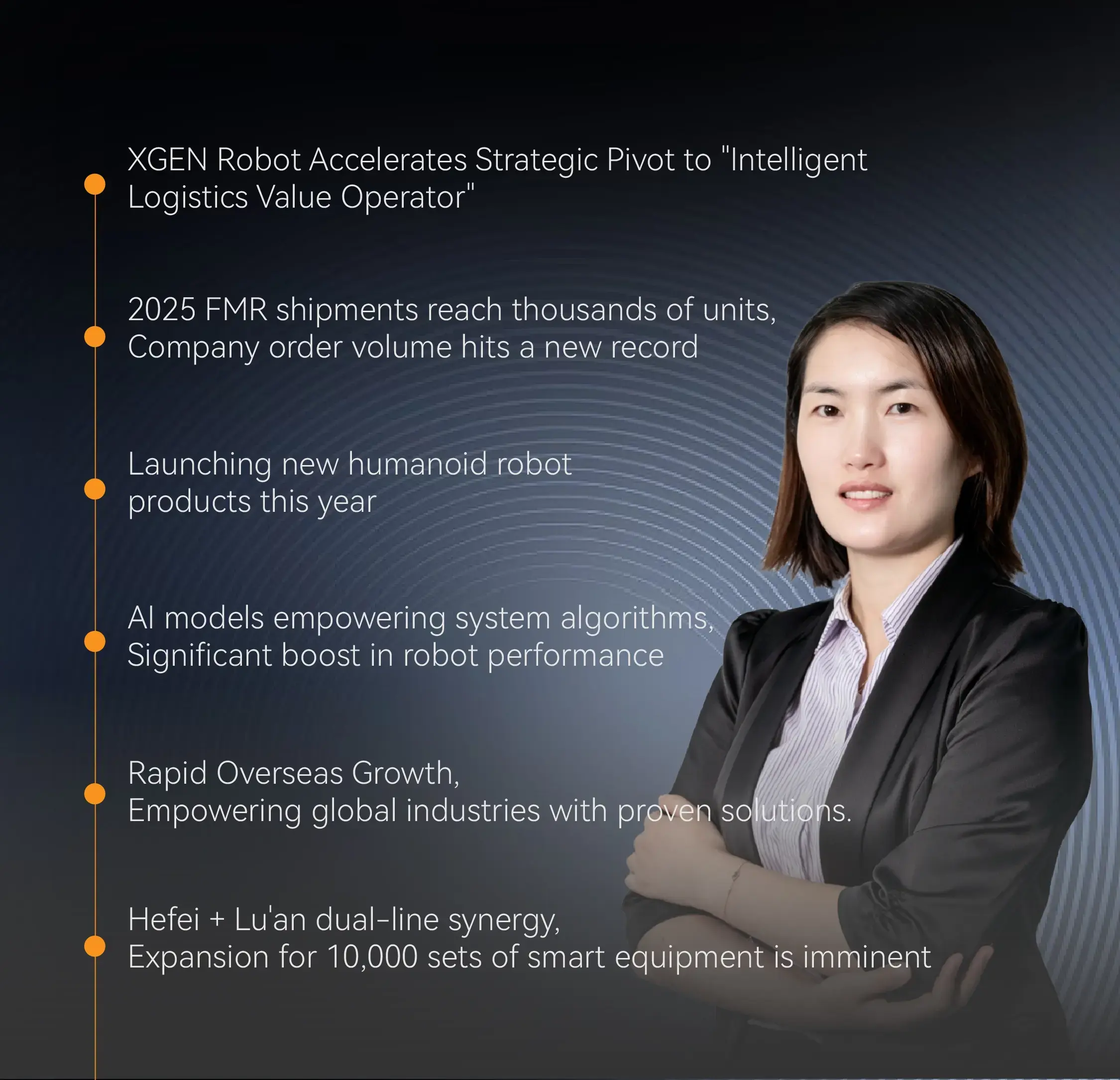
In 2026, the intelligent logistics and mobile robotics sector is moving into deeper waters. At this critical juncture, XGEN Robot, a veteran with nearly two decades of deep industry experience, is demonstrating its development confidence through intensive strategic actions, completing a profound self-transformation.
At the beginning of 2025, the Hefei new production line officially started construction, planning an annual capacity of 10,000 sets of intelligent logistics equipment, with almost all factories and equipment built using self-developed hardware and software; in March 2026, the Lu’an intelligent logistics equipment project officially started construction, forming an initial dual-base production capacity layout. In terms of performance, XGEN Robot’s FMR annual shipment volume in 2025 reached several thousand units, with order volume and order value hitting record highs.
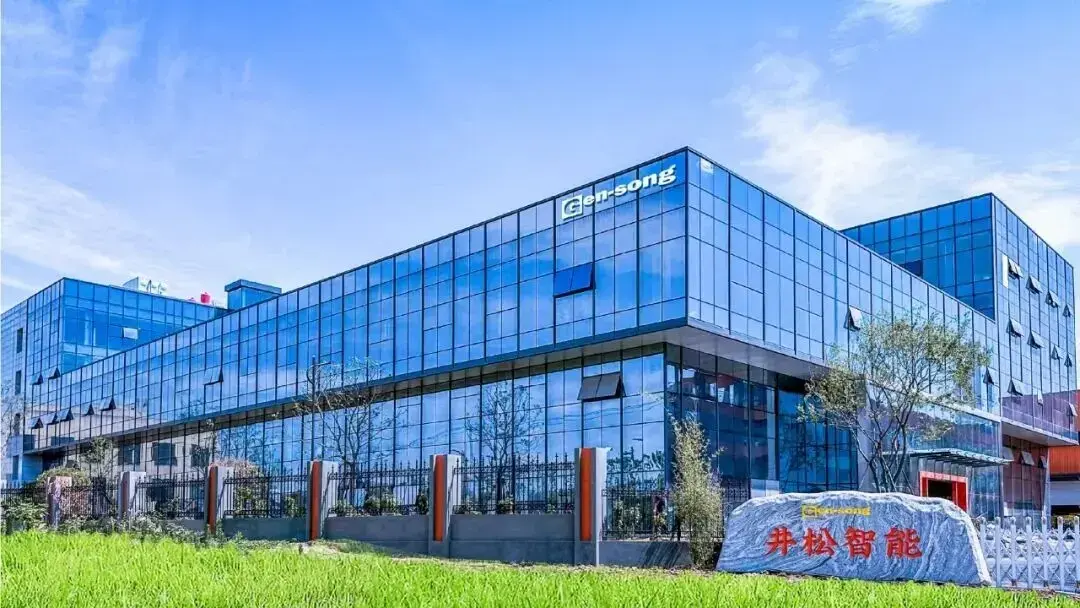
This company, deeply rooted in the industry for nearly 20 years, is sending a clear message through frequent actions: accumulation is complete, full acceleration begins.
Strategic Transformation: From “System Building” to “Operational Management”
For many years, external perception of XGEN Robot has often been between “system integrator” and “product manufacturer.” However, in the view of Vice General Manager Wang Dan, XGEN Robot’s true positioning is an “operator of intelligent logistics value.” In 2025, this strategic positioning entered a full-scale breakthrough stage, as the company officially transformed from a “system provider” to an “intelligent logistics value operator.” This is not just a change in terminology, but a fundamental restructuring of its business logic.
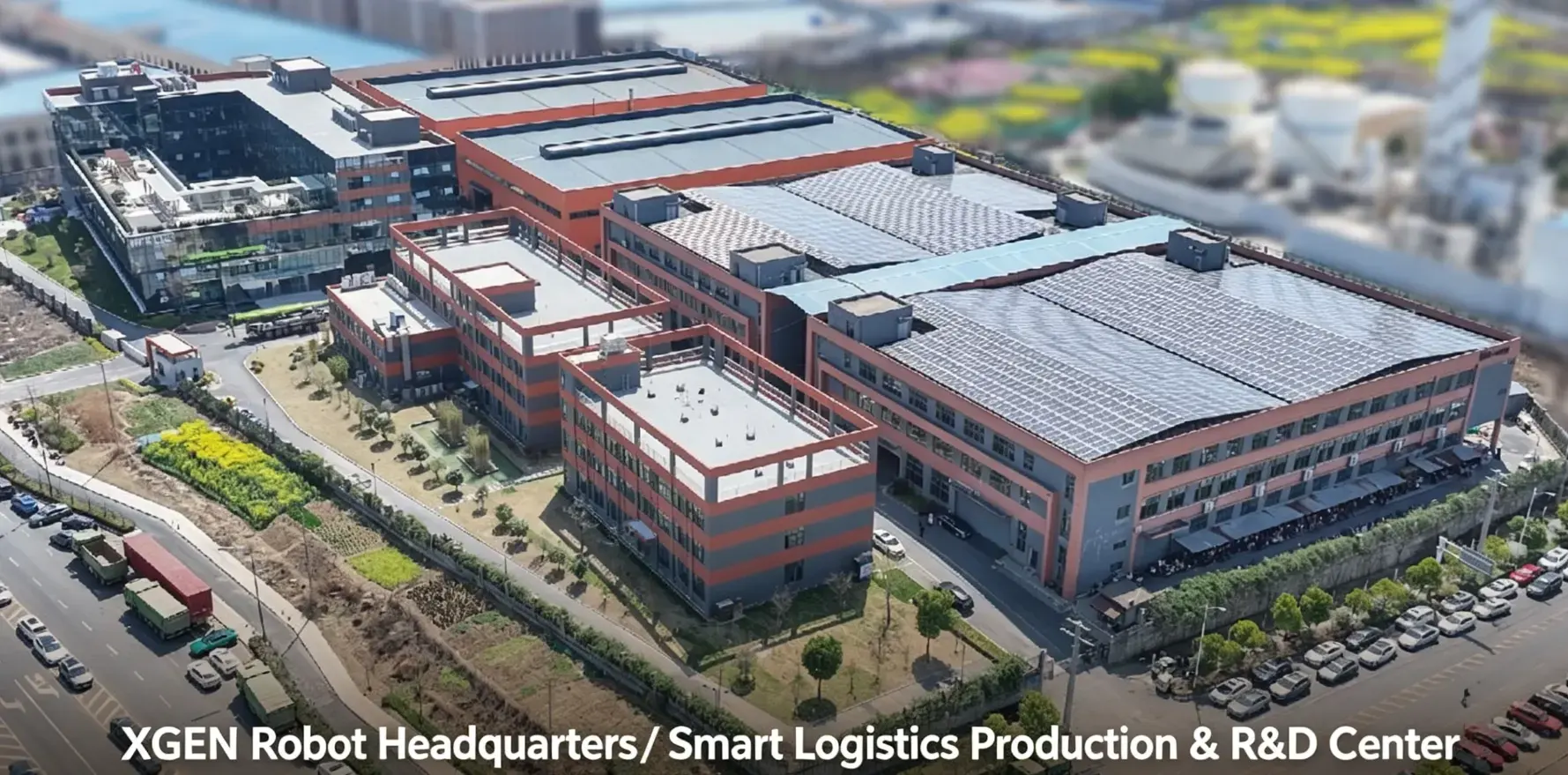
The heavy investment in production capacity is the foundation supporting this massive strategic transformation. In 2025, XGEN Robot launched a new production line with an annual capacity of 10,000 sets of intelligent logistics equipment. Wang Dan describes it as a “discrete intelligent manufacturing automated production line.”
Currently, the layout of both external and internal factory equipment has been prepared, and the entire equipment system will adopt a fully automated mode, fully utilizing all self-developed software, hardware systems, and equipment from XGEN Robot. This means XGEN Robot is using its own robots and systems to produce future robots, achieving a unified closed loop of technology and cost efficiency.
As product lines expand from indoor to outdoor scenarios, and from lightweight handling to heavy-duty applications, XGEN Robot inevitably faces the balance between standardization and customization. Wang Dan summarized the solution as “standard products as the foundation, customization as the wings.” She explained that standard products drive scale-based cost reduction and fast delivery, while customization deeply addresses customer pain points, complementing and iterating with each other.
On the customization side, Wang Dan breaks capabilities into software and hardware dimensions. On the software side, it involves system and algorithm customization for different logistics equipment; on the hardware side, it includes adaptation for different cargo forms such as pallets, clamps, and rod-type goods. Furthermore, for explosion-proof requirements in the chemical industry or extreme cycle efficiency demands, XGEN Robot can also provide deep structural customization.
The underlying support for this customization capability is XGEN Robot’s long-term accumulation on its software platform. The company proposes the concept of “software-defined hardware” and builds an integrated software platform that enables unified scheduling, unified monitoring, and unified maintenance, breaking equipment silos; it develops powerful intelligent scheduling algorithms supporting real-time collaboration of hundreds of robots and dynamic task allocation optimization; the multi-robot collaboration mechanism includes traffic management, collision avoidance, and task priority strategies.
As project scale expands, the complexity of multi-device coordination continues to increase, making the value of software even more prominent. “Hardware is the skeleton, software is the brain. The more complex the project, the more obvious the value of software becomes—this is our true long-term barrier,” Wang Dan emphasized.
This “software + hardware integration” logic has demonstrated strong support in delivery performance. In the Coca-Cola project, XGEN Robot achieved an industry record of “20-day rapid deployment.” Wang Dan summarized that this efficiency is not accidental, but comes from self-owned manufacturing systems, full-stack self-developed software and hardware that reduce coordination costs, as well as over 20 years of accumulated product management, project management, and lifecycle control experience. “Experience, technology, and manufacturing—these three together form our confidence in delivering large-scale complex projects fast and well.”
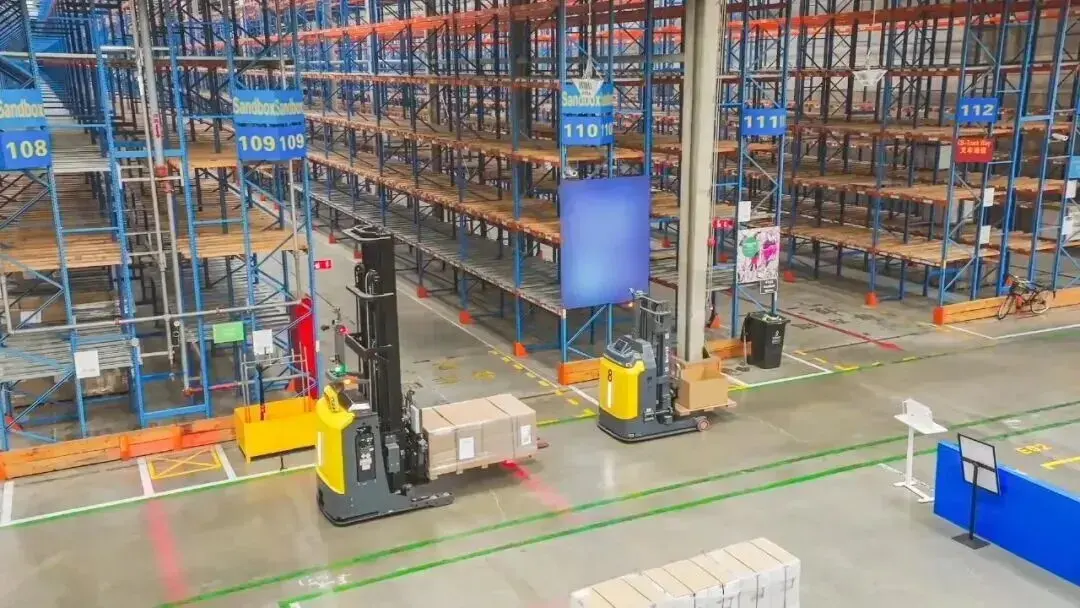
Market data confirms this solid transformation: in 2025, XGEN Robot’s FMR annual shipment volume reached several thousand units, with both order volume and order value hitting record highs, while intelligent warehouse and robotics segments both achieved significant growth, showing strong momentum of “accumulation completed, full acceleration underway.”
Product Expansion: From Heavy-Duty Forklifts to Humanoid Robots
If strategic transformation is XGEN Robot’s steering wheel, then continuous product line expansion is the way it steps on the accelerator.
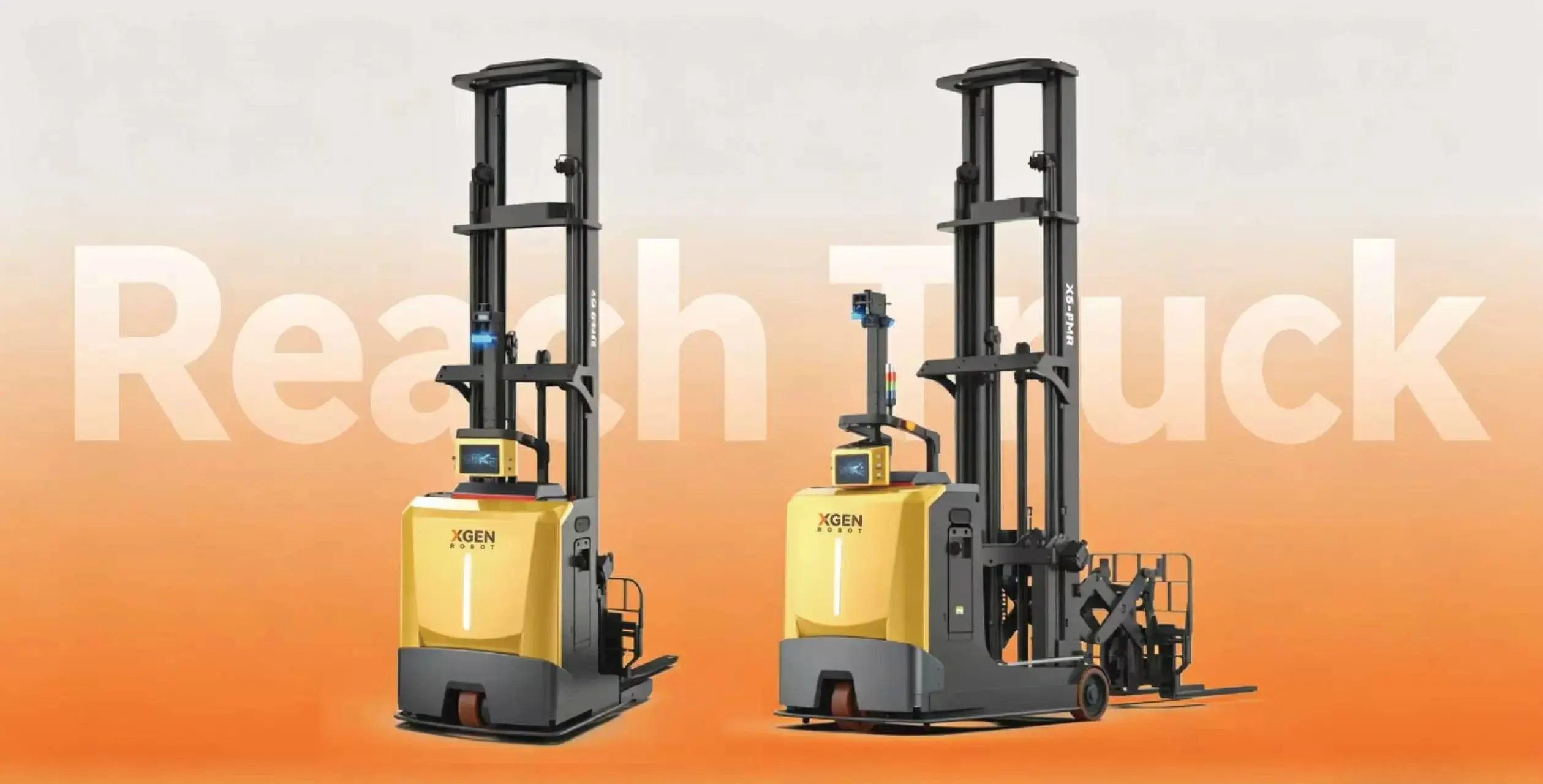
Wang Dan observed that the two most in-demand product categories in the current market are: small, flexible FMRs with low investment and fast payback, and highly technical heavy-duty counterbalance and reach-type FMRs with wide application scenarios. This reflects that logistics automation demand is shifting from “simple transportation” to a dual breakthrough of “extreme efficiency” and “complex scenarios.”
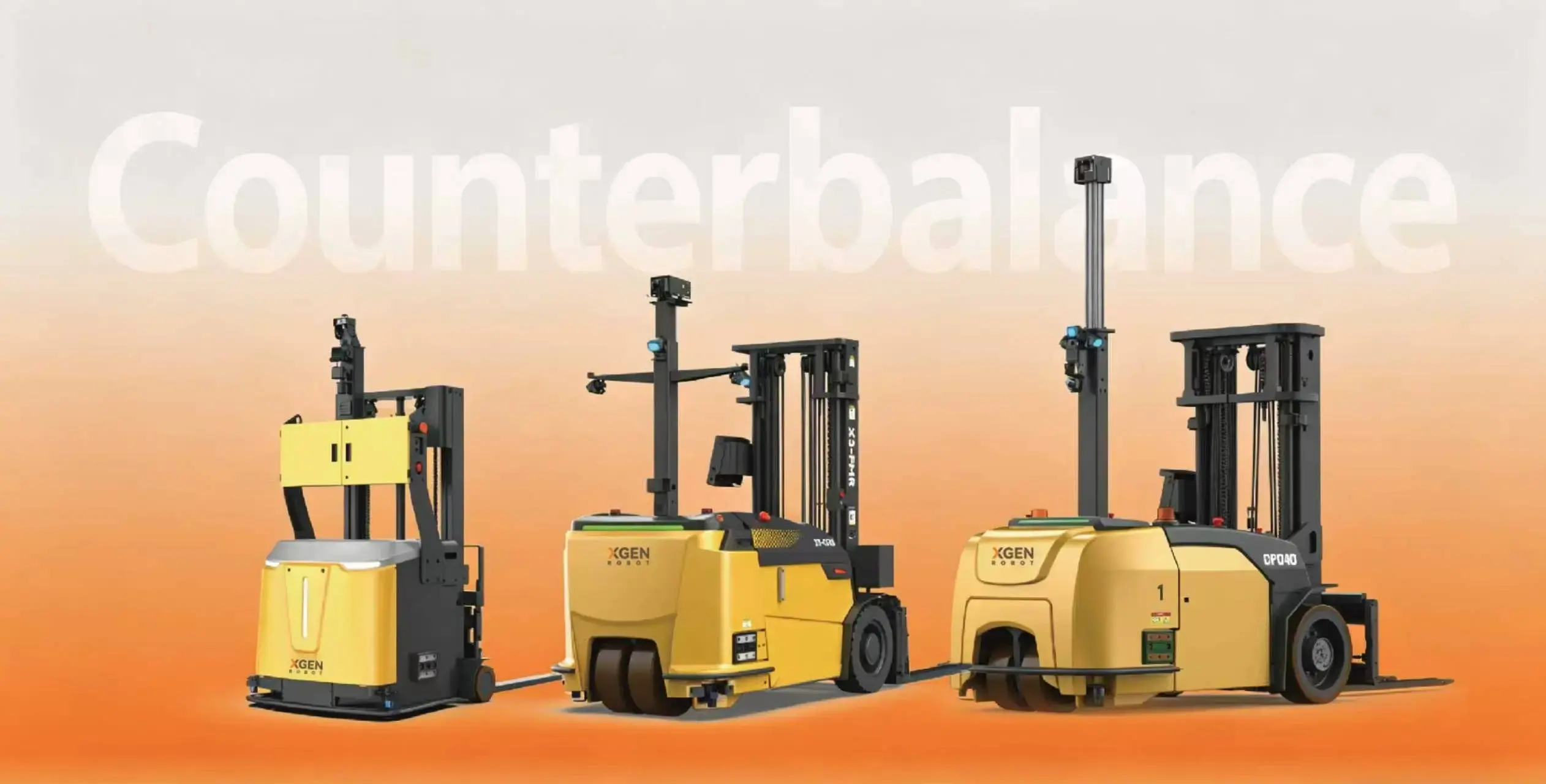
Among them, demand for heavy-duty automation is rapidly exploding. Therefore, in recent years, XGEN Robot has focused heavily on the heavy-duty mobile robot field, launching 2.5-ton outdoor counterbalanced forklifts and 8–10 ton ultra-heavy stackers. Currently, counterbalanced FMRs cover 1–10 tons, and stacker-type FMRs cover 1–30 tons. “Above 4 tons is what we define as heavy-duty products,” Wang Dan said.
Heavy-duty scenarios impose extremely high technical requirements. XGEN Robot has accumulated three key technologies in this field: high-precision navigation, heavy-load stability control, and complex environment adaptability. The company adopts multi-sensor fusion positioning technology for outdoor and semi-outdoor environments to ensure stable navigation in large-scale scenarios; proprietary chassis and suspension design combined with dynamic center-of-gravity adjustment algorithms solve stability issues during heavy-load start-stop and turning; vehicle protection covers waterproofing, dustproofing, shock resistance, and adaptation to extreme temperature and humidity conditions. “These capabilities are not laboratory parameters, but real-world hard skills refined through dozens of heavy industry projects,” Wang Dan said.
It is worth noting that this capability in solving complex scenarios has already translated into strong customer stickiness. According to Wang Dan, a leading beverage industry customer has placed nearly 20 repeat orders for XGEN Robot products. “Repeat purchase is the highest indicator of value operation capability. Market recognition is the best answer.”
If heavy-duty applications represent deepening existing scenarios, then the two products released at CeMAT Asia Logistics Exhibition last October represent XGEN Robot’s proactive expansion into new scenarios—an intelligent unmanned loading solution filling the “last link” of logistics, and a wheel-legged humanoid robot targeting general-purpose scenarios. Wang Dan emphasized that although they appear very different, both aim at one goal: extending from warehousing to full production integration.
FMRs are already well-established inside warehouses, but loading goods from platforms into truck containers has long relied on manual labor, making it a bottleneck in logistics efficiency. To solve this, XGEN Robot established a dedicated loading team last year, integrating sales and technical functions. Currently, FMR-based cross-warehouse outdoor loading within industrial parks has been implemented in multiple cases; the team is further expanding into platform loading and railway container loading scenarios.
In the humanoid robot direction, XGEN Robot chose a practical “wheel-leg hybrid” form. “This is absolutely not for show,” Wang Dan said, “it is a proactive choice based on over ten years of FMR technology accumulation. Logistics scenarios require robots that can climb stairs and cross loading docks. Wheels ensure efficiency, legs ensure obstacle-crossing ability. This is to solve the ‘last meter’ problem in warehousing.”
In Wang Dan’s view, the biggest technical challenge for humanoid robots lies in 3D spatial perception and real-time multi-modal AI fusion—robots must see clearly, move steadily, and operate accurately in complex environments. Technologically, XGEN Robot focuses on in-house R&D while cooperating deeply with top partners in key areas. Its wheel-legged humanoid robot has already moved out of the laboratory and is undergoing commercial validation in specific warehousing and manufacturing scenarios, getting closer to mass deployment.
The underlying core supporting this hardware evolution is today’s highly discussed AI large model. Facing various voices around “AI + robotics,” Wang Dan’s perspective is very pragmatic: “AI is not a concept, but a productivity tool for XGEN Robot.” Currently, AI large models have been integrated into the scheduling system and robot perception layer, specifically in dynamic task allocation, real-time path planning and obstacle avoidance, and predictive maintenance.
Capacity First, Global Expansion with Confidence: Anchoring Long-Term Value in Uncertainty
This year, XGEN Robot will simultaneously launch both wheel-based and leg-based humanoid robots, maximizing coverage of different customer scenarios. In the early stage of industry form uncertainty, exploring both directions in parallel is itself a pragmatic choice.
The expansion of the product matrix requires synchronized production capacity support.
In March 2026, the Lu’an intelligent logistics equipment project officially started, marking the formation of a “Hefei + Lu’an” dual-base cooperation structure. In XGEN Robot’s planning, the two bases play different roles: Hefei serves as R&D center + high-end manufacturing base, focusing on high-value products and technology incubation; Lu’an serves as mass production base, focusing on large-scale delivery and rapid response. Together, they will support an annual capacity of over 10,000 sets of intelligent logistics equipment.
Wang Dan summarized this capacity strategy in three sentences: “Production drives R&D, production ensures delivery, and production expands overseas.” The last “expands overseas” points to another key direction—globalization. According to Wang Dan, a significant portion of the new capacity is reserved specifically for overseas markets.
Going global is a mandatory question for Chinese intelligent logistics companies today. In recent years, XGEN Robot has successfully delivered multiple landmark overseas projects in Spain and other countries, with service coverage extending to the United States, Spain, South Korea, South America, Southeast Asia, and more.
During global expansion, Wang Dan identified three key differences between overseas and domestic customers: first, they place much higher emphasis on system stability and compliance, with stricter requirements on certification, standards, and safety; second, although decision cycles are longer, once trust is established, brand loyalty is very strong and tends toward long-term cooperation; third, they have extremely strict requirements for full lifecycle service, which is not a “one-time deal.”
These differences also bring structural opportunities. Wang Dan noted that many overseas warehouses are temporarily leased, requiring extremely high space utilization efficiency, which drives strong demand for high-reach equipment, especially XGEN Robot’s “reach-type FMRs.” Meanwhile, inquiries from Western Europe, especially Spain, have increased significantly, and under global supply chain restructuring, Chinese intelligent logistics solutions are being increasingly considered by high-end markets.
Facing increasingly fierce global competition, Wang Dan believes XGEN Robot’s advantage lies in strong products, localized service, and experience accumulated from nearly 2,000 large-scale projects. Although brand recognition and global service network still require continuous improvement, she remains confident: “We are already on the road, and we are running faster and faster.”
This confidence comes not only from smooth globalization, but also from the strategic resilience of an industry veteran. With internet giants and automotive newcomers entering the robotics sector, the industry is becoming increasingly competitive. However, Wang Dan believes that while cross-industry entrants have capital advantages, XGEN Robot has irreplaceable scenario experience. “Our attitude is clear: welcome competition, focus on ourselves, and let delivery speak.”
From its founding in 2007 to listing on the STAR Market in 2022, from unmanned forklifts to embodied intelligence, XGEN Robot has taken nearly 20 years to evolve. Standing at this point, Wang Dan’s judgment is clear: deep integration of intelligent hardware and AI is the core trend of the industry, and customer demand is shifting from “machines that work” to “machines that become smarter over time.”
Behind this transformation are three completed shifts: equipment evolving from automation to autonomy, systems from single-point to global coordination, and decision-making from delivery to operation.
To support this evolution, XGEN Robot plans to launch a logistics industry-specific AI model, aiming to achieve a qualitative transformation from “selling equipment solutions” to “delivering digital intelligent operational capabilities.”
In the end, Wang Dan redefined XGEN Robot’s role:
“Not a handling tool, but an operational partner.”
—This is not only a declaration from an industry veteran on the path of AI-driven high-quality development, but also a long-term commitment to continuously optimize and continuously create value for customers.